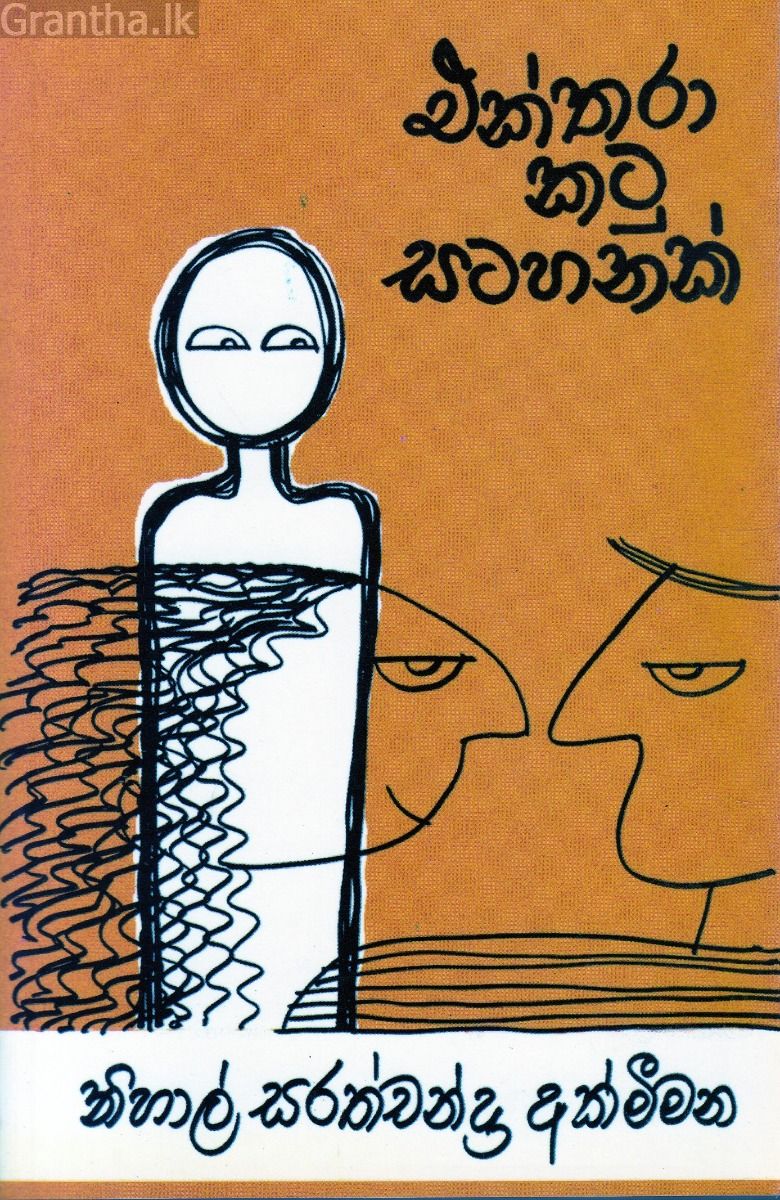

එක්තරා කටු සටහනක්
About this book
නිහාල් අක්මීමන කොළඹ ඉසිපතන සහ ආනන්ද යන මහ විදුහල් වල ආදි ශිෂ්යයෙකි. වෘත්තියෙන් ගෘහ නිර්මාණ ශිල්පියකු වන ඔහු දැනට වසර 10 ක පමණ කාලයක සිට ජීවත් වන්නේ නවසීලන්තයේ ඕක්ලන්ඩ් නුවරය.
ළමා අවදියේ පටන් පුවත්-පත්, සඟරා ආදියට කවි, කෙටි කතා සපයමින් සාහිත්යකරණයට පිවිසි නිහාල් එකල රසිකයන් අතර මහත් ජනප්රියතාවයක් ඉසිලුවේය. ඔහුගේ ප්රථම නවකතාව යෞවන නිර්මාණයක් වශයෙන් 1972 දී 'මාරපාශය' නමින් ප්රකාශයට පත් විය.
එයින් පසු ගතවූ අවුරුදු ගණනාව තුළ ඔහු ගේ සාහිත්යාභිලාෂී බවෙහි අඩුවක් වී නොමැති බව දීර්ඝ නිහැඬියාවකට පසු පළවන මෙම 'එක්තරා කටු සටහනක්' තුළින් පැහැදිලි වෙයි.
දීර්ඝ කාලයක් තිස්සේ පෙර අපර දෙදිග සාහිත්ය පරිශීලනයේ යෙදුණු නිහාල් අක්මීමන ජීවිතය කෙරෙහි විචාර බුද්ධියෙන් බලන සංවේදී මනසක් ඇත්තෙකියි සිතන්නට මේ කතා සමූහය සාක්ෂියකි.
Details
පිටු ගණන (Pages)
112
මුද්රණ තත්වය (Print)
මුද්රණයේ පවති - In Print
Delivery and payment
- 1–3 working days in Sri Lanka, 7–14 days worldwide
- Free delivery in Sri Lanka over රු. 10,000.00
- Cash on delivery within Sri Lanka
- Cards, eZ Cash and FriMi accepted online
- Pay in 3 instalments with Koko or Mintpay
You may also like
Customer Reviews 2
-
Ekthara Katu Satahanak A short story collection:Ekthara Katu Satahanak
A short story collection:
Nihal Sarathchandra Akmeemana
112 pages. Rs. 100.
What made Martin Wickramasinghe an icon on whatever literary item he was engaged in is primarily due to the use of dialect. The dialect is subject to change over time; Wickramasinghe's use of dialect cannot be employed in today's context.
Nihal Akmeemana's latest short story collection also breathes the lively dialect. His use of local dialect is not something alien, but it is something we are already familiar with as Sri Lankans.
Nihal sometimes tries to make the characters live by approaching into first person narrative. Many of his characters are grief stricken, disappointed in life. To convey these ideals, he makes the best use of the language, especially dialect.
The title story depicts the disappointment of a university undergraduate. As it usually is, a second year undergraduate falls in love with a first year. He tries everything to win her attention.
As in most cases, the girl knowingly or unknowingly exploits the boy's caring for her; the climax of this one-sided love affair is when the girl wants to study notes from the boy. Nihal's talent rests here, as he develops the plot through the study notes.
When the study notes are given for the first time, the girl was new to the university and obviously without a partner, much to the relief of the boy. But things fall apart with time.
Towards the end of their university life, the boy is depressed whereas the girl finds another guy. The boy is asked to go to her boarding place and take the notes from the girl residing there. All hopes are shattered, and he never steps into her boarding.
Although his plots are good enough, Akmeemana becomes too sentimental at times. Sometimes he too brings his opinion too, by damaging the story continuity.
Another interesting story is about a man called 'Yellow Groom'. The man is always made fun of, and always deceived by even the elders in the village.
It is customary for an elderly person, descending from a traditional village, to praise highly the village traditions, and how they maintained the high standards of discipline. It is ironical to see how the same community makes fun of an innocent man in the village, without letting him alone. Akmeemana indirectly questions the high standards of the village.
Ekthara Katu Satahanak, above all, reads well, making you share their life mostly grief-stricken.
Nihal Akmeemana is an old boy of Isipathana and Ananda Colleges. He has been in New Zealand for 10 years professionally engaged in architecture. His thirst for writing began in childhood. His first literary work, a novel 'Mara Pashaya', was published in 1972.
Sachitra Mahendra -
★★★★☆ ‘Ektara Katu Satahanak’ (A Certain Sketch)A sketch can always remain an unfinished work. Such work leaves room for further pondering on the unfinished contents. Otherwise, it will be a finished product manufactured according to a prearranged standard. On that plain, Nihal Sarathchandra Akmeemana’s ‘Ektara Katu Satahanak’ (A Certain Sketch) invites you to a deep reflection. For the right connoisseur with the right taste, it will form an aesthetic journey.
Upon reading the complete collection of 12 stories, a question began to bother me: is the life that much bitter? Is it abound with sorrows? However bitter the life may be, we have to face it. That is the plain truth that the author drives home, I feel, in the story titled ‘Punarutpattiya’. Yahapathhami, an over-the-hill builder, comes to terms with that reality.
He is in the twilight of his life and is well delighted at the home he had built with his own hands. He feels satisfied with his son and the family. But then he feels remorseful when his son and daughter in law choose to demolish the very home he had built without him being sounded out. However, in the end, he deals with the reality and invokes blessings on his son’s family and grandchildren.
Maternal affection has been the subject and theme of the eastern literati to a clichéd extent. That said, the story titled ‘Mavak Saha Duwak’ does not transport any fresh effect. That tale seems a small painting fitted into a large frame. However, that story remains etched in our mind and compels us to grip the mental and social reality. Children are fond of parents. That is a strong bond. However, the very children get struck in the socio-economic structure.
They find it difficult to treat their parents well to their heart’s content. As a result, the parents become helpless. Seeing well that they cannot help their parents well, the parental bond and the practicality is painted beautifully in this story.
‘Minipiriyakage Kathawa’ transports you to another wonderful experience. The Buddhist literature introduces a monk who so holds on to his robe reborn as a moth. The subject of this particular story is the account of a grandmother who was so fond of one particular dress. But it is not merely a story of a grandmother fond of a dress. Aren’t we also attached to our materialistic stuff? Sometimes don’t we hold on to our opinions so tight? The grandmother of the tale protected the robe because it was quite precious to her. Why did the granddaughter protect the robe? Merely because it was her grandmother’s dress.
However, in the end, it was just a rag for the beggar woman.
‘Mathusena’ can be introduced as a story analyzing another facet of a human mind. A sandy seed cannot be considered mount Himalaya. But how would you feel when a seed drops into your eye? Some mental emotions are like that. Some emotions may seem unimportant or small, but when approaches mind it can illuminate or darken the whole mind. Not only the mind, but it can also affect someone for the whole lifetime. That worrying feeling that he is ageing and subject to ill-fame is properly dissected here. The author tries to portray the mental disturbance in the body.
“The blackened lips pouted and slanted nose convey an abnormal appearance. A few scars unimaginable to be erased in a few years remain in the cheeks.”
A major portion of the stories in this collection is like a compendium of visual lines on the suffering of not only the victims but also the witnesses of our core values distorted in the face of urbanization. The urban poverty is the subject of most stories. News stories about the people living in cities and city footsteps. The urban society roller-coasts at a faster pace than the village society. The development comes to pass according to that fast pace. That development is confined to a privileged few. The rest is thrown out of this rotation. You can have fun as long as you hold tight on to the merry-go-round. Loosen your hand a bit, and you cannot avoid that fatal fall. Alli Sayyaf’s fate is same. The wealth power, caste power, position power and even the thuggery power come with terms and conditions. Up to a certain limit. At first, Alli Sayyaf is so powerful. Nothing is impossible for him in the area. But the moment he loses his hand, he gradually loses power.
The author has succeeded in handling the language to maintain the behavioural pattern of the likes of Sayyaf settled in the vicinity of the capital city. However, a doubt arises whether the language style used to narrate his expression at first suits the characteristics of Alli Sayyaf.
“My life is not spent according to anyone’s command. That must be noted at the outset. Because I viewed the so-called civilized world from a different perspective, my view must be different. As I have no interest in verifying the credibility of that fact, I maintain a life bent on the evil side as well as the beneficial side.”
Third Person narrative form would have suited this much better than the first person.
Marriage, sex and woman is a tragic tale, especially in South Asia. These elements must not surrender to the money. That must happen on their own will. However, the reality is different. All the above-mentioned elements are subject to money – that’s the reality we need to come to terms with. The main reason is that society has not taken steps to establish the waning social security owing to urbanization of the very society.
There exists no hint to identify Katrina, the protagonist of Abinikmanata Pera. There existed a husband who earned her love as well as loved her. Ever since he succumbed to an accident, she faced the life struggle with faithfulness towards him. The result? She inherits the road with the children. The only twilight for her seems to get married to another even though against her wishes. More than a marriage it is more apt to say a cohabitation. It is difficult to say if it is an accurate solution.
Write a review
Write a review